
1. Examination and advice
First we look at your teeth, gums and interdental spaces and talk about where home care has been reaching its limits so far.
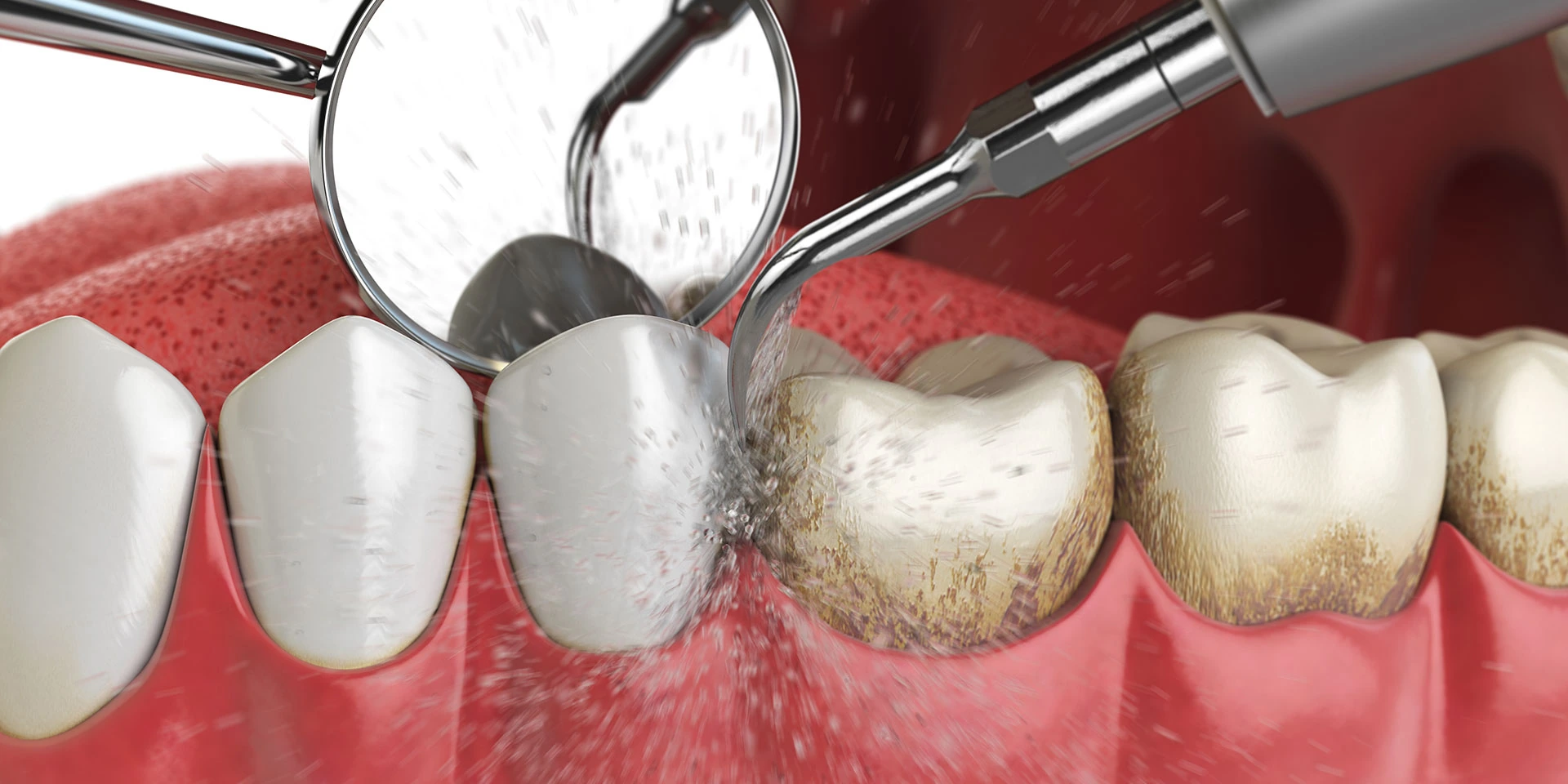
For good oral and dental hygiene: regular removal of the deposits that increase the risk of caries and periodontitis.
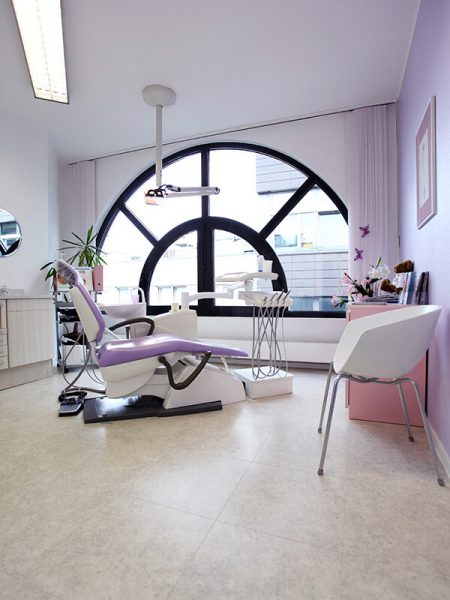
That is why our practice in central Cologne offers professional teeth cleaning. It includes not only the removal of plaque from teeth and tongue, but also proper advice on oral care, cleaning the spaces between the teeth with dental floss, using a tongue brush and so on.
Professional teeth cleaning is carried out in our practice by specially trained nurses. They remove deep-seated bacterial plaque using ultrasound, Airflow (a powder-water-air mixture) as well as special brushes, dental floss and other aids. Finally the teeth are polished, which removes the roughness of the tooth surface that encourages plaque to form. After the professional cleaning our specialists apply a fluoride varnish to the teeth, which serves to prevent caries.
The cleaning is done in a single appointment and fits easily into a day in town. You will find us at Hohe Straße 73–75, right in Cologne's pedestrian zone.
How often it makes sense for you is something we discuss at your check-up — for most adults, twice a year is a good rhythm.
A professional cleaning at our practice usually takes about an hour. It always follows the same steps — how long each one takes depends on how much plaque has built up.
First we look at your teeth, gums and interdental spaces and talk about where home care has been reaching its limits so far.
Tartar and firmly attached plaque are removed with ultrasound and hand instruments — including below the gumline, where brush and floss cannot reach.
Soft plaque and stains from coffee, tea or nicotine are lifted by the powder-water-air mixture. The spaces between the teeth are then cleaned with floss and special brushes.
Finally the teeth are polished so that less new plaque settles on the smooth surface. The closing fluoride varnish strengthens the enamel and helps prevent caries.
For most adults, two appointments a year are a good guideline. Anyone with implants, dentures or treated periodontitis, who smokes or tends towards gum inflammation often benefits from shorter intervals. We will discuss the right rhythm for you after the examination — many statutory health insurers now contribute to the cost, so it is worth asking yours directly.